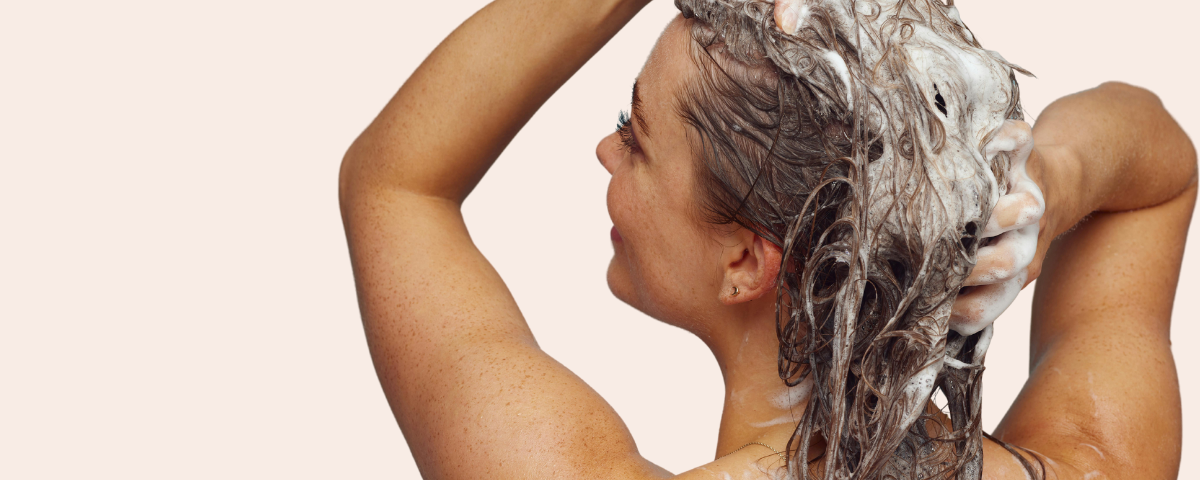

Are your curls suddenly falling flat, feeling sticky, or not absorbing any moisture despite intensive treatments? Don't worry, your hair isn't suddenly "damaged" – it's most likely just over-conditioned. When layers of styling and conditioning products build up on your hair, there's only one solution: a complete reset through deep cleansing.
Quick Answer
**Build-up** refers to stubborn residues of oils, butters, styling gels, or limescale that form an invisible film around the hair. Conventional mild curl shampoos cannot break through this layer. A special **Clarifying Shampoo (deep cleansing shampoo)** noticeably frees the hair from this burden and makes it receptive again to fresh conditioning.
Table of Contents
1. What is build-up and how does it occur?
Curls love rich conditioning. But this very preference carries a risk: Many leave-ins, heavy oils, creams, and strong-hold gels leave minimal residues with each application. If you regularly use the co-washing method or exclusively use extremely mild low-poo shampoos, these residues are not completely removed.
Over time, this collection of products combines with the scalp's natural sebum and minerals from hard, calcified tap water. A water-insoluble layer forms, coating the hair shaft like cling film.
2. The symptoms: How to recognize over-conditioned hair
If your hair is affected by build-up, it usually shows through very typical signs:
Conditioning has no effect: You apply a moisturizing mask, but after rinsing, your hair immediately feels straw-like again. The conditioning simply bounces off the build-up layer and doesn't even reach the inside of the hair.
No bounce: Your curls hang tired and stringy, appearing heavy and losing all volume at the roots.
Lack of shine: The hair looks dull, flat, and feels strangely waxy or coated when dry.
Itchy scalp: The layer also builds up on the scalp, which can lead to irritation, itching, or fine, dry flakes.
3. Clarifying: How does deep cleansing work?
To break through this barrier, you need a deep cleansing shampoo (clarifying shampoo). These products contain stronger, targeted cleansing surfactants that are able to reliably break down and remove even stubborn polyquaterniums (film formers), waxes, and mineral deposits from the hair.
Since a clarifying shampoo leaves the hair completely bare and unprotected, subsequent conditioning is essential: After deep cleansing, the cuticle layer is maximally receptive. Be sure to use this moment for an intensive, rich deep conditioning treatment to replenish moisture levels immediately.
4. The process: How often should you reset your hair?
Deep cleansing is not a product for daily or weekly use. Because it cleanses very thoroughly, using it too often would dry out the hair. Instead, find the right rhythm for your routine:
For most curly-haired people who regularly use gels, oils, and leave-ins, a monthly deep cleanse is perfectly sufficient to keep the hair fresh and light.
If you primarily cleanse your hair with conditioner, you should use a clarifying shampoo every two weeks to prevent build-up at the roots in good time.
Whenever your usual favorite products suddenly stop working as they should, or your curls go limp for no reason, it's time for a spontaneous clarifying wash.
Frequently Asked Questions about Product Build-up
Can I also use baking soda or pure dish soap for the reset?
Absolutely not! These extremely aggressive household remedies have a pH value that is far too high. They permanently destroy the delicate cuticle layer of the hair and severely dry out the scalp. A good cosmetic deep cleansing shampoo is formulated to cleanse intensely but respect the skin's pH value.
Does a clarifying shampoo strip hair color?
Yes, a deeper cleanse can make freshly colored or toned hair fade a little faster, as it intensively opens the cuticle layer. If you have colored curls, it's best to use clarifying shampoo directly *before* your next coloring appointment or use a special, color-safe deep cleansing product.
Does an apple cider vinegar rinse also help against build-up?
An apple cider vinegar rinse (heavily diluted with water) is excellent for removing limescale deposits and restoring shine, as it lowers the pH value. However, it usually cannot alone tackle stubborn polymer and wax layers from styling products. Here, shampoo is indispensable as the first step.
Conclusion
Sometimes, less is simply more. Before you frustratingly search for new, even more expensive styling products, give your curls a chance for a clean start. A regular reset frees your hair structure from old residues, allows your scalp to breathe again, and ensures that your daily moisturizing care actually reaches where it's needed. Free your curls and let them bounce weightlessly again!