
Quick Answer
Curls should never be combed when dry, as this destroys their natural clumping, causes frizz, and leads to breakage. The only gentle method is wet detangling: detangling hair when wet in the shower, while a conditioner acts as a protective slippery film (slip).
Table of Contents
1. The Dry Brushing Ban: What happens to curls?
When curls dry, they form harmonious clumps. If you then run a normal brush through this dry structure, you forcibly pull the bundled waves apart. Each individual hair suddenly stands isolated, creating a huge cloud of frizz.
Much worse, however, is the mechanical damage: since curly hair has irregular cross-sections and natural weak points at the bends, a brush gets caught in tiny knots in dry hair. Instead of loosening the knot, the brush stretches the hair elastically until it eventually breaks or splits.
2. Wet Detangling: Why Water and Slip Change Everything
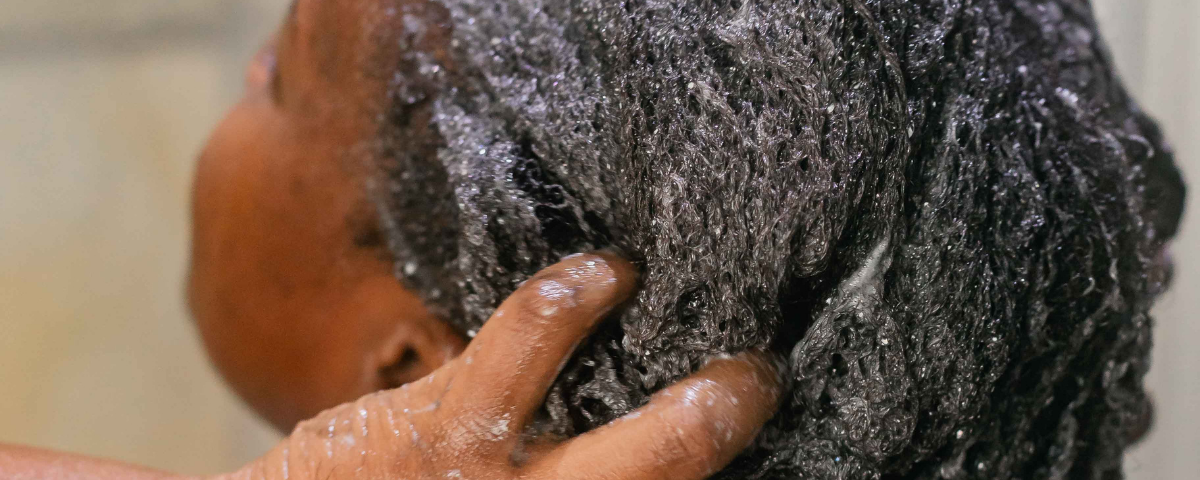
The salvation for your hair is called wet detangling – detangling in a wet state. When hair is completely wet, its elasticity changes. But beware: wet hair is also more delicate. Therefore, you must never comb it without aids.
The magic word is slip. By working a generous amount of conditioner or a hair mask into the wet lengths, you create an ultra-smooth protective film around each hair. Knots are no longer stuck but slide apart almost on their own with gentle pressure.
3. Step by Step: Painlessly Detangle Knots
On wash day, it's best to follow this system to protect your hair as much as possible:
Apply the product and wait 1–2 minutes until the hair has absorbed the moisture and the cuticle feels smooth.
Always start at the ends. Loosen the knots at the hair ends and then work your way up, piece by piece, towards the roots. Starting at the roots only pushes the knots down and compacts them into matted nests.
Only rinse out the conditioner once all hair is completely detangled. Your curls will now form perfect clumps even when wet.
4. The Right Tools: Fingers vs. Wide-Tooth Comb
The gentlest brush in the world is your own hands. With so-called finger detangling, you feel exactly where a knot is and can specifically pull it apart with your fingers, without stressing healthy hair.
If you have very thick or long hair, this may not always be enough. In this case, use a wide-tooth comb without sharp molding seams. The wide spacing between the teeth ensures that the natural curl clumps remain intact and are not torn apart.

Gentle Detangling
Siztaz Wide-Tooth Comb for Perfect Curl Clumps
Discover now →Frequently Asked Questions about Combing Curls
When wet detangling, I lose a lot of hair. Is that normal?
Don't panic! A person naturally loses about 100 hairs per day. With straight hair, these loosely fallen hairs simply slide out of the lengths unnoticed. With curls, however, the loose hairs catch in the bends of other curls. If you only detangle your hair every 3–4 days when washing, the accumulated hair from several days comes out all at once. This may look like a lot, but it is completely normal.
How do I refresh my curls in the morning without brushing?
Use the refresh method: Spray your hair with a little water or a diluted leave-in spray until it is slightly damp. Gently scrunch the curls from bottom to top with your hands to reactivate definition. You can simply wrap individual stray strands around your finger (finger coiling).
Are there exceptions where dry brushing is allowed?
Only directly before a hair treatment that you will wash out anyway, or if you consciously want to tie your curls back into a sleek bun (Sleek Look). However, for everyday curl definition, dry brushing remains strictly forbidden.
Conclusion
Leaving your brush in the cupboard initially requires some courage. But your curls will thank you. By exclusively detangling during wet moments with plenty of conditioner, you reduce hair breakage to a minimum and finally say goodbye to unwanted frizz. Protect your curl structure, detangle systematically from bottom to top – and enjoy perfectly defined clumps!